Direct answer
Start the Gibb River Road from the east at Kununurra by heading west toward the Pentecost River and El Questro. That is a dry-season movement on a mostly unsealed road that is not a city shortcut. A day trip to the crossing is a photograph. A two-night eastern sampler is a taste. Derby is the other end of about 660 kilometres and a different trip. Do not tell your friends you “did the Gibb” because you stood on a crossing for twelve minutes.
What the road is
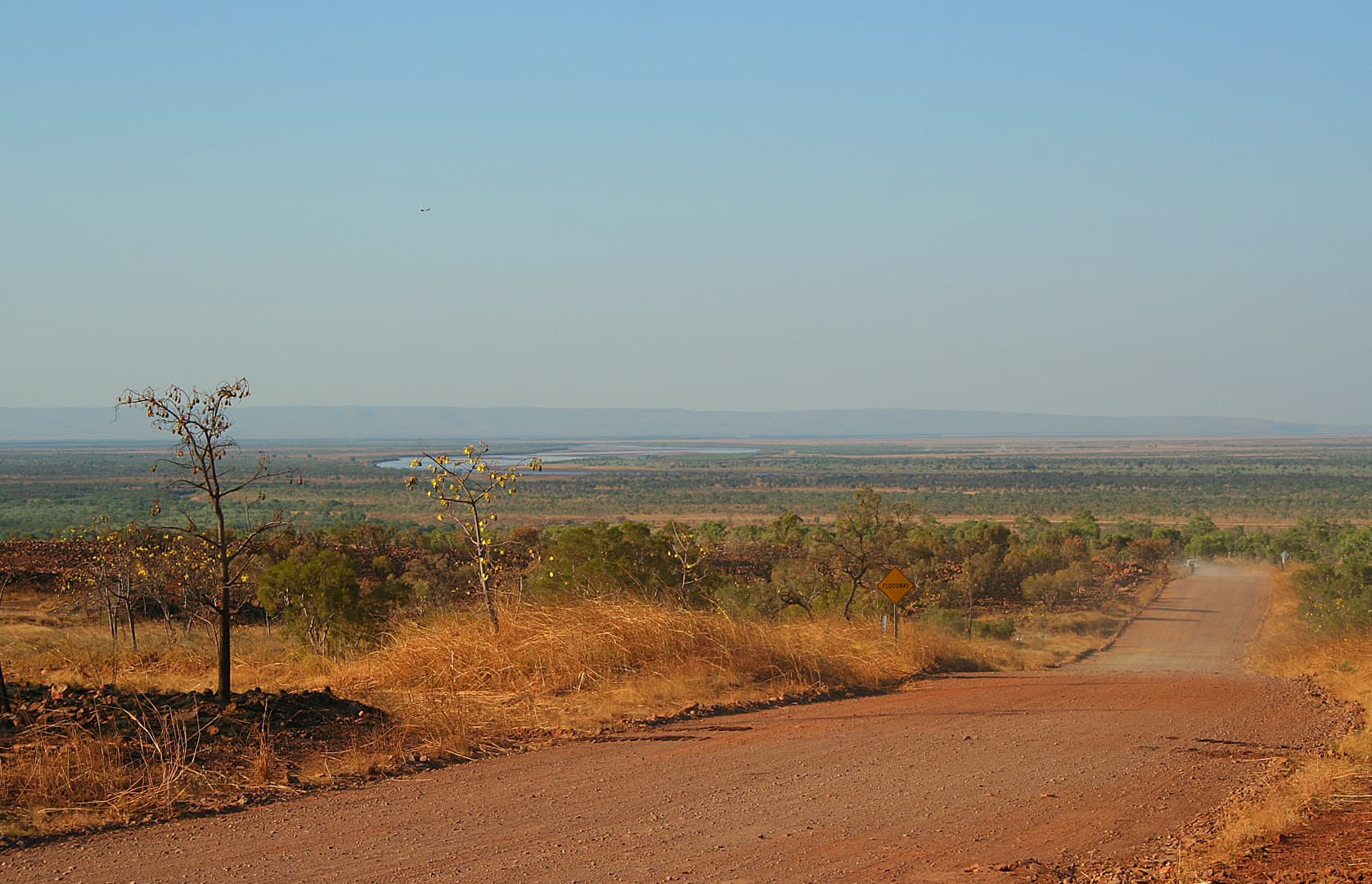
The Gibb is a Kimberley spine between Derby and Kununurra: corrugations, dust, station access, boabs, and river crossings that change personality after rain. The eastern end is the one this planner owns. The west Kimberley gorges people quote from Broome-side itineraries are not an hour from town.
Main Roads WA and station notices own closures. Tourism WA owns the lifestyle copy. Your tyres own the truth.
Where to start, practically
Fuel in Kununurra. Carry water. Read the hire contract. A 2WD may be legal on some sealed approaches and illegal or foolish once the unsealed argument begins. High-clearance 4WD is the default assumption for anything that calls itself a Gibb trip. See 4WD versus self-drive.
El Questro is the usual first wilderness-park stop. Beyond that, kilometres accumulate faster than stories. Turn around on purpose. Night driving is how cattle and fatigue write endings.
Season
Dry season (about May–October) is the open-road conversation. Wet season is a closure conversation. Shoulder months are a maybe. When to go is not optional reading if this road is your identity.
The eastern sampler versus the full crossing
| Shape | Honest name | Not honest |
|---|---|---|
| Day to Pentecost / El Questro | Eastern day | “We did the Gibb” |
| Two nights east | Eastern sampler | “Derby next year implied” |
| Kununurra to Derby | The Gibb | A casual long weekend |
If you want the full crossing, plan a week-plus, bookings, and the humility to wait out weather. That itinerary may start in Derby. This page will not pretend otherwise.
Culture and stations
You pass through living Country and working stations. Gates have manners. Dust on a house is not a souvenir. Ask before photographing people. Leave art. The Country guide applies on pastoral corridors.
Combining with Purnululu
The Bungles are south, not west. They are not “on the way” to a Gibb day unless your map is a children’s menu. Give them their own sunrise. Purnululu.
Services
Do not expect a supermarket sequence. Some stations sell limited supplies; some do not. Carry the boring things: water, a second meal, a tyre attitude. Kununurra remains the last useful town in the east. Getting there is the highway essay; this page is the unsealed one.
Historic tour codes that once meant “Gibb day” now redirect to tours. We did not recover a 2004 kilometre-by-kilometre brochure. DBCA parks you detour into still need their own passes. Parks Australia is still a different system.
If you only remember one sentence: from the east, the Gibb begins as Pentecost country, and it does not end because you took a photograph.
Corrugations as a language
Corrugations are not a metaphor. They rattle fillings, cameras, and the belief that a city SUV is a Kimberley plan. Slow down. Check the spare. Check the contract. If you are on a licensed tour, you still need water and the humility to skip a side road that was not in the briefing.
Gates, stations, and the myth of empty land
The Gibb looks empty from a moving vehicle. It is leased, lived on, and storied. A gate has a last state it wants to be in. A house does not want your dust as a souvenir. Ask before you photograph a person who is not in a visitor-centre uniform.
Turning around as expertise
The expert move from the east is to turn around on purpose after El Questro or a second night, and to go home to Kununurra with a working vehicle. The amateur move is to “see how far we get” toward Derby with a Friday flight. Derby will wait. The aircraft will not.
Fuel ranges from the east
Fill in Kununurra more often than your city tank light suggests. Station bowsers are a maybe. A maybe is not a plan. Carry water as if the bowser were a rumour. The eastern sampler is still a remote road even when El Questro has a kitchen.
What an eastern day can honestly hold
Leave Kununurra early. Reach Pentecost country without treating the crossing as a red-carpet stop for a drone. Walk one El Questro gorge if the park and heat agree. Soak if the springs are open and the etiquette allows. Drive home in daylight. That is a full day. Adding a second gorge and a night drive is how the eastern sampler becomes a rescue story.
If you have two nights, walk two ends of the day and sit still in the middle. The Gibb is a road. It does not owe you a personality transformation by Thursday. The planner on this URL exists so you can start from the east without stealing Broome-side itinerary language that does not apply.
The eastern sampler versus the Derby crossing
From Kununurra, an honest Gibb day is Pentecost country and El Questro, then daylight home. From Derby, the Gibb is a different week with different stations, different waterfalls, and a different pride story. Do not steal Broome-side language for an eastern day. Do not tell anyone you “did the Gibb” because you stood on a crossing for twelve minutes.
Main Roads WA owns the access sentence. A dry-season calendar is not an alert. Shoulder months are a maybe. Wet season is often a closure. Night driving is how cattle write endings.
Hire contracts that end the argument
If the contract forbids the Gibb or the Spring Creek Track, you do not have a 4WD day. You have a letter. Photograph the clause. Photograph the tyres. Then book a licensed tour or change the week. This planner will not talk you past a bond.
What to read next
El Questro for the usual first gorges. 4WD for the vehicle argument. When to go for the season hedge. Getting there if you still think you will arrive at 4 p.m. and “just pop out to the Pentecost.”
Corrugations as a clock, not a personality test
An eastern Gibb day is already long before you add a second gorge. Dust, heat, and a crossing that is a road — not a stage — set the hour. If you are still photographing the first pool at 3 p.m., you are already writing a night drive. Turn around. The Pentecost will be there in another dry season. Kununurra’s chemist will be more useful tonight than a second waterfall.
Stations and parks along this road are landlords with their own clocks. Ask which gorge is open this week. Do not paste a Broome-side waterfall list onto an eastern sampler. The east is El Questro country first. The rest of the Gibb is a different reservation.