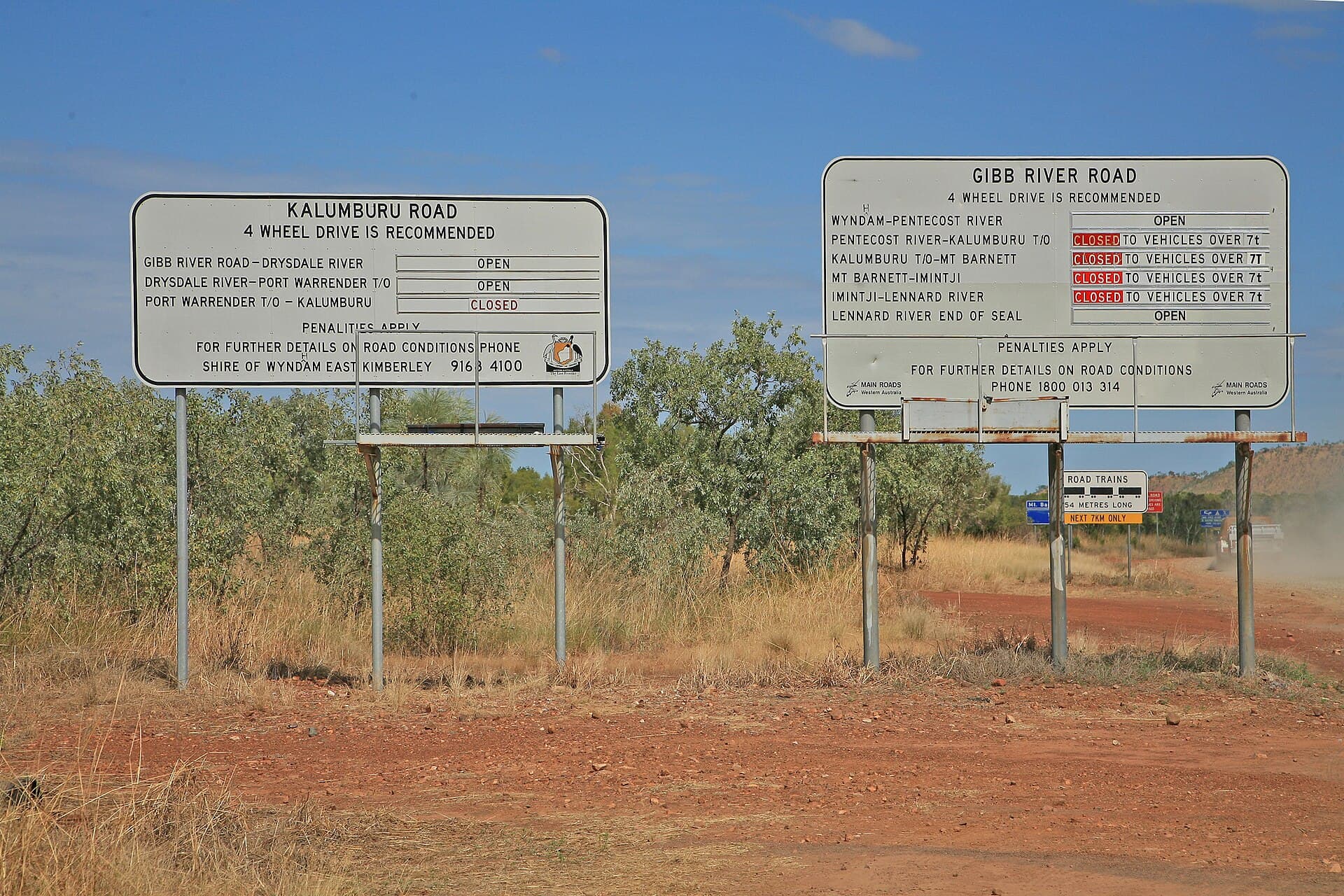
From the east, the Gibb River Road begins as an unsealed road heading west from the Great Northern Highway between Kununurra and Wyndham, towards the Pentecost River and El Questro. A day trip to the Pentecost crossing gives you a photograph. Two nights at El Questro or Home Valley gives you a taste. Driving the full road to Derby, roughly 660 kilometres of mostly unsealed track, is a different trip, and it deserves its own plan.
This post is for people starting the Gibb from the Kununurra end. It covers what the eastern section is like, how to prepare and how to decide how far to go.
What the eastern Gibb is like
The first stretch west of the highway runs past the Cockburn Range, one of the most photographed escarpments in the Kimberley, especially in late afternoon light. The road then reaches the Pentecost River crossing, a wide, rocky ford that is a classic Gibb image. Beyond it, station stays, gorges and campgrounds are strung out along the road, with long, corrugated sections in between.
Within a day or two's drive of Kununurra you will find:
- El Questro, with its gorges, thermal springs and range of accommodation. See our El Questro guide.
- Home Valley Station, a station stay with camping and accommodation beneath the Cockburn Range.
- The Pentecost River crossing, best seen in daylight and crossed with care.
Before you start
- Fuel up in Kununurra. Fuel is limited along the road, and prices and availability vary.
- Carry plenty of water and food, plus extra in case of breakdowns or delays.
- Use a suitable vehicle. A high-clearance 4WD is the standard advice. Check your hire agreement, as some companies restrict or prohibit travel on the Gibb or charge extra for it.
- Check road conditions the night before and the morning you leave with Main Roads WA and the local shire. Sections can close after rain, and conditions change during the season.
- Lower tyre pressures for corrugations and gravel, and carry a compressor to reinflate on the bitumen.
- Carry recovery gear and a satellite device. Mobile coverage is very limited.
Crossing the Pentecost safely
The Pentecost is a tidal river, and saltwater crocodiles live there. Never wade the crossing to check its depth. Watch other vehicles, check the depth markers, cross slowly and steadily, and do not stop midstream for photos. Early and late in the season, water levels can be higher and conditions less predictable. Our crocodile safety guide explains how to stay safe around Kimberley waterways.
How far should you go?
| Time | Suggested plan |
|---|---|
| One day | Drive to the Pentecost crossing and back, with a stop at El Questro if access allows. Return before dark. |
| Two to three nights | Stay at El Questro or Home Valley, explore a gorge or two and return to Kununurra. |
| A week or more | Drive the full Gibb to Derby, with stops at gorges and stations along the way. |
There is no shame in doing only the eastern end. It is better to enjoy a short section properly than to rush the whole road and spend your trip on corrugations.
Season matters
The Gibb is a dry-season road. It is usually open from about May to October, depending on conditions. During the wet season it usually closes or becomes impassable, and early and late in the season some sections and crossings may still be affected by water. Read our when to go guide and our guide to Kimberley wet season travel.
Driving tips
- Avoid driving at dawn, dusk and night, when cattle and wildlife are on the road.
- Slow down on corrugations and loose gravel, and take extra care on crests and bends.
- Give way to road trains and large vehicles, and pull over safely if needed.
- Keep headlights on, as dust can reduce visibility.
- Take breaks. Corrugations are tiring.
Purnululu is a different direction
Many visitors want to combine the Gibb with the Bungle Bungles. Purnululu is south of Kununurra, not west, so it is a separate trip. Give it its own days. Our Bungle Bungles walks guide and East Kimberley road trip itinerary show how to fit both into a week.
Plan the eastern start
Read our eastern Gibb planner, El Questro guide and the East Kimberley travel guide. Check official road reports every day, travel in daylight and treat the eastern Gibb as a destination in its own right.